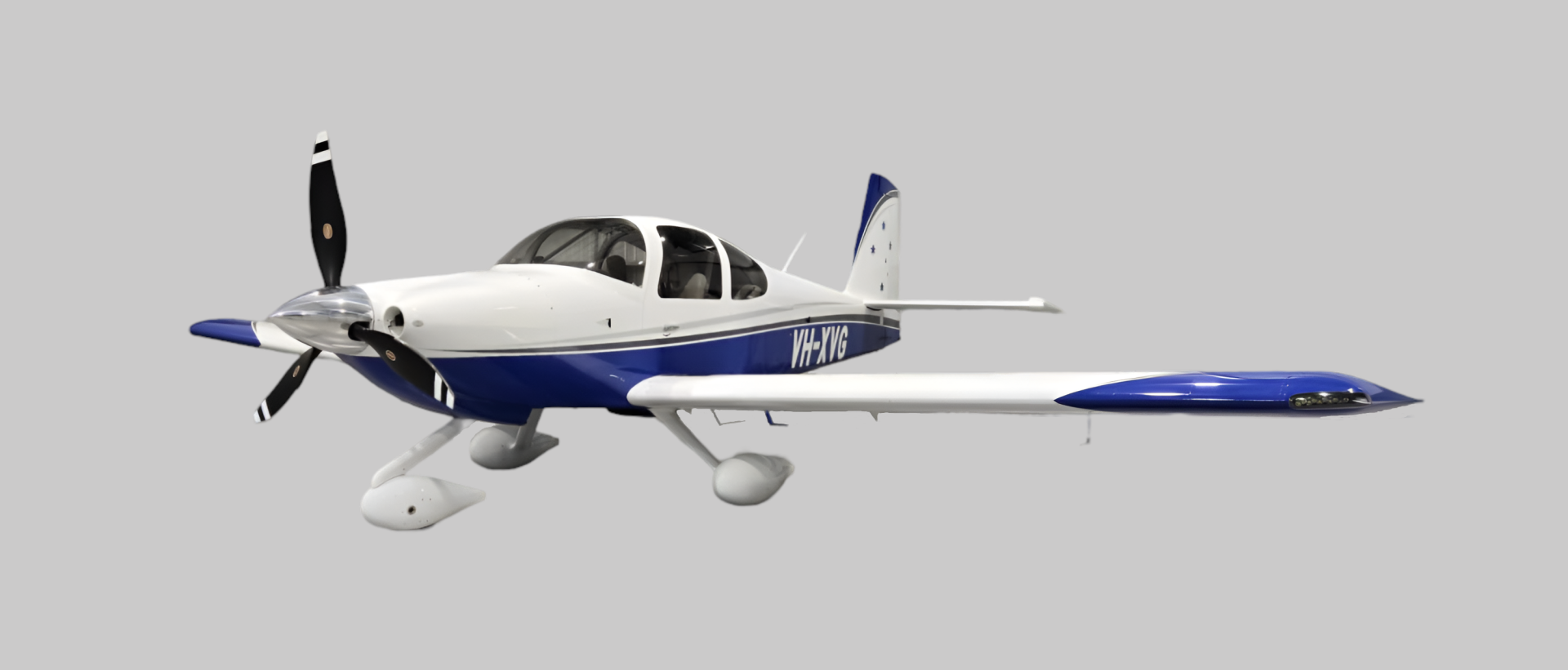
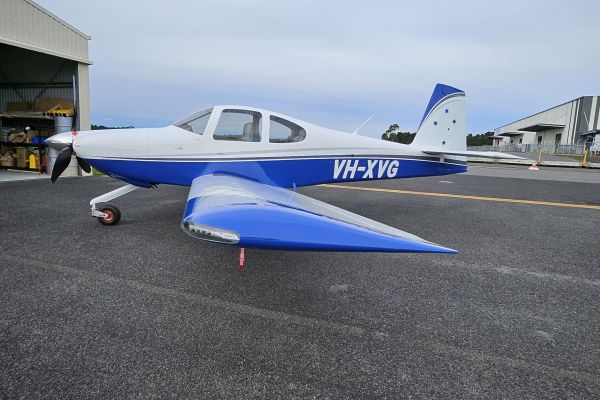
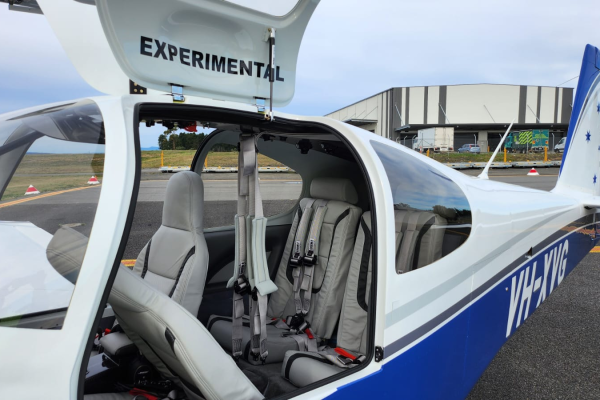
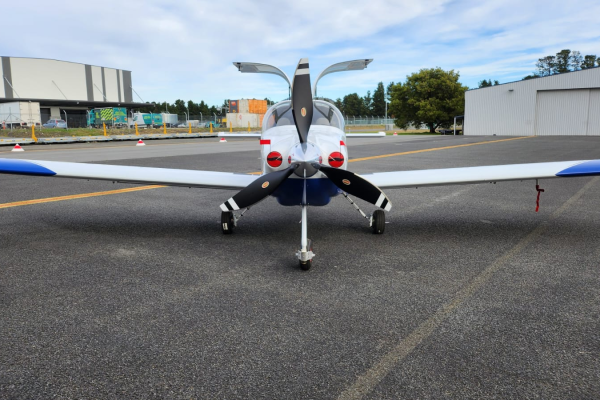
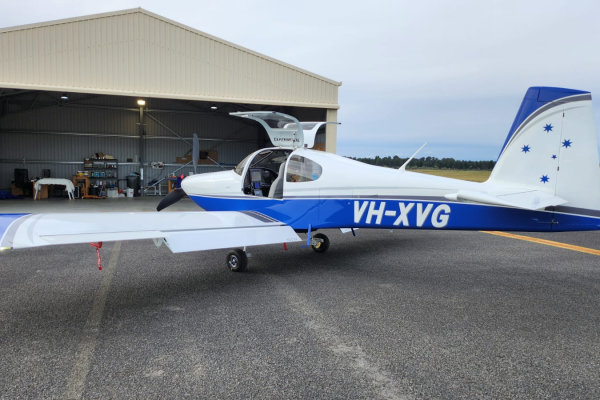
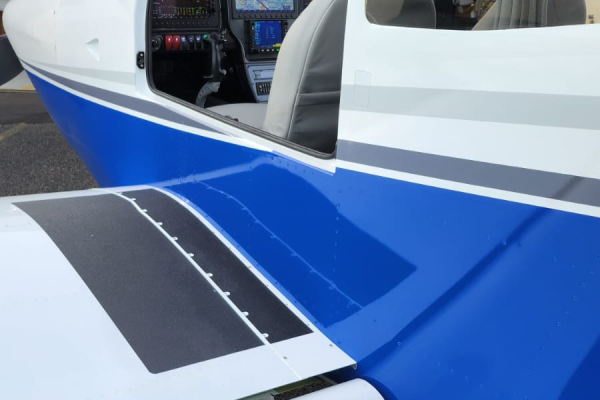
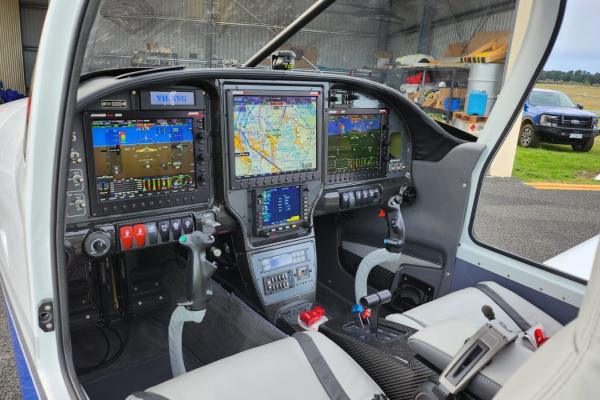
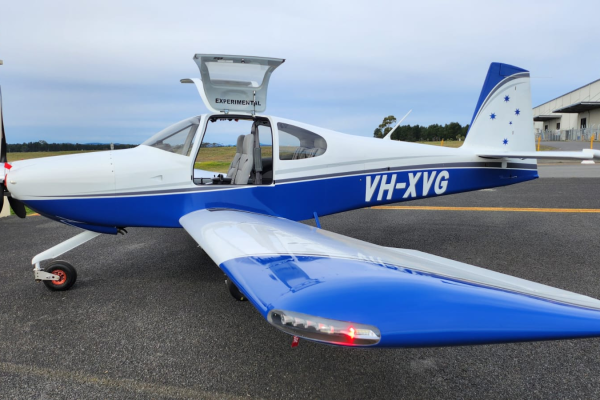
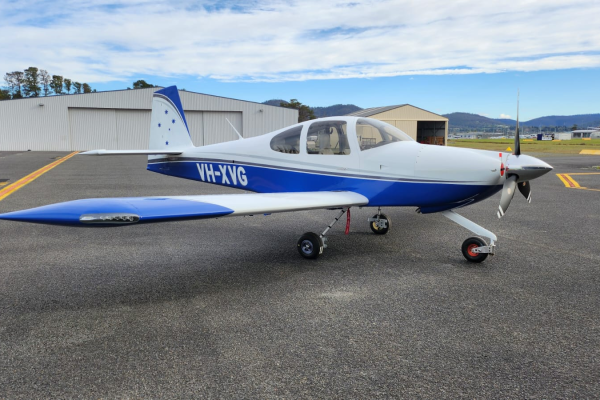
I’m all done. After completing the test program, and submitting a mountain of paperwork, VH-XVG has been issued with a “phase 2” Certificate of Airworthiness. I can now fly anywhere in Australia, carry passengers, day or night VFR, or IFR. Because I built the aircraft, I’m authorized to maintain it.
With special thanks to:
My wife Kerrie, who drove zillions of rivets and supported me all the way
Test pilot Kayle, a true professional in every sense of the word
Others too numerous to mention. You know who you are!
Like my all-slow build, phase 1 testing is also going slowly. A few squawks have required parts to be ordered from the USA to fix, that’s cost me weeks at a time. I’ve had to move Hangars, which was a big job and moving into the new Hangar is ongoing. Weather, Covid, other commitments all get in the way. I’m not on any deadline so I’m just letting flight test proceed at its own pace.
Having said that, I’m 15 hours into phase 1 flight test and the aircraft is simply awesome. Engine break-in went well, and for such a complex aircraft there have been very few problems. The redundant power system in particular has exceeded expectations.
Here’s XVG taking off from YCBG at 7am on Feb 25 2025 to test fly some instrument approaches under VFR. I’m particularly appreciative of test pilot Kayle for ongoing test flight assistance; Kayle at the controls for this flight.
March 28 update: Now 20 hours into phase 1. Here’s a video taken near the North Coast of Tasmania during a recent autopilot testing and fuel flow calibration flight. Cruising Lean-of-Peak, fuel flow is showing as ~44 litres per hour. After refilling tanks post flight, this turned out to actually be 41 litres per hour. Calibration factors in the EFIS displays were changed post-flight to correct this error.
April 2 update: Now 23+ hours into phase 1 testing, and almost done. At the same time we did full aft CG gross weight stability testing, we took the opportunity – while the back seat and baggage compartment were full of sand bags – to do some circuit tests as well. I hated piling so much weight in the back of the aircraft, but we have to test to the limits. As it turned out, the RV-10 took all this in its stride.
First video is the takeoff at gross weight, full aft CG.
Next is a flapless touch-n-go, at full aft CG and near gross weight (yes, it’s a bumpy runway):
Finally, a short field landing (without hard braking), full aft CG and near gross weight.
I’m inching closer to first flight. All the paperwork is prepared, Weight & Balance is done, and the formal control system checks have been carried out and signed off by myself and a second authorized person. An avionics LAME is booked for next Monday, Sep 30, to do the necessary pitot-static and transponder tests. In the meantime, today was the day for the first engine run with the cowls on, and taxi testing. After an initial engine run, we started up again and did some careful taxi tests on the apron outside the Hangar.
First taxi tests on the Apron
Once that all looked good, we got a clearance out to the runway at Hobart airport. It was a quiet time and the tower were happy to give us a clearance and get their first look at VH-XVG. Here are two videos, one on the way out to the runway, and then on runway 30 at YMHB, doing the beginning of a mini take-off roll followed by some S-turns.
On the way out to runway 30 YMHBFaking a takeoff roll and doing some S-turns on runway 30, YMHB
Inspections after returning to the Hangar revealed nothing untoward. I downloaded the EFIS logs and the maximum CHT reached during this test was a cool 312 degrees F. The underside of the cowl was at ambient temperature to touch, indicating that the Fiberfrax insulation on the inside of the bottom cowl was doing a great job.
It was a bit surreal to see XVG venture out into the world today after a 10 year all-slow-build RV-10 project. I stayed behind while test pilot Kayle did these runs, because I was getting over a cold and didn’t want to share it. But in a way, it was better because I got to carefully view it all from the outside while still keeping in touch with Kayle on the phone.
From a construction standpoint, XVG is flight ready. It’s ready to weigh (will happen this week), have the avionics tested, and have a 2nd control system inspection. I’ve got a mountain of paperwork to do for a C of A phase 1 application, but took an opportunity to roll it outside for a few photos. The only things missing in these photos are the rear leg fairings and wheel spats, which won’t be on for the first few flights.